“Now that you have seen…what are you going to do?”
May 5, 2026 | Faith & Stewardship

“Doug, the day that this gets old is the day that I am going to resign. This is and always will be about the children and showing them, in life-changing ways, how much Jesus loves them.”
This was Compassion International President & CEO, Santiago “Jimmy” Mellado’s response when I asked him if seeing these Compassion kids—their smiles, their warmth, their joy—ever gets old.
And after recently spending a week in Zambia (one of Compassion’s newest countries) with Jimmy and a handful of Compassion’s supporters, I can vouch for what he said.
It doesn’t.
The breadth and depth of the impact Compassion is helping to make in the lives of Zambian children and families after just two short years in the country is nothing short of miraculous. It’s clear that God is at work. But beyond the numbers of healthy babies delivered, children protected, fed, and discipled, churches trained and resourced, teens and young adults given training and opportunity, single mothers provided life skills and financial training, were the individual people we got to meet and the stories that we got to hear.
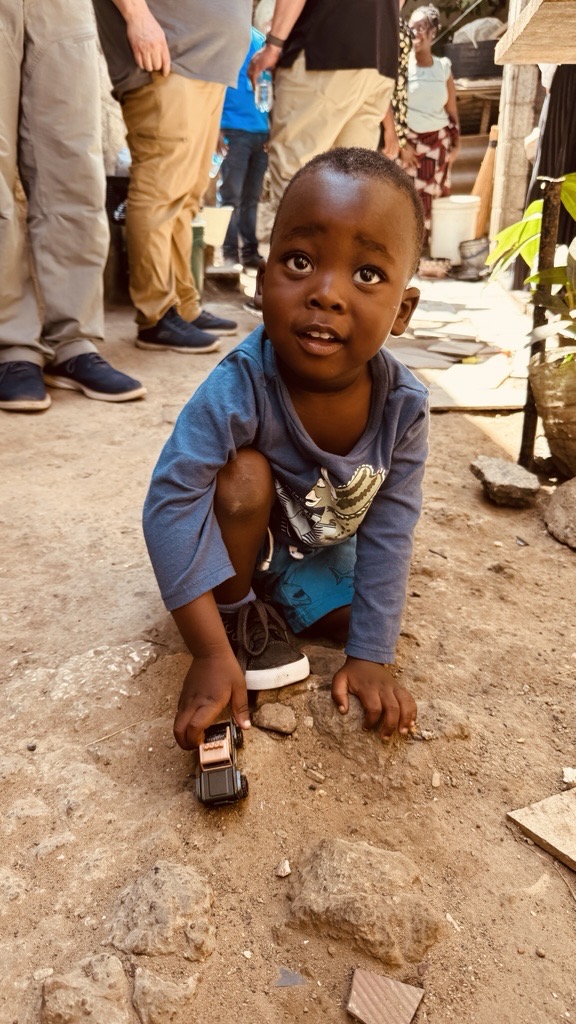
One family that Geralyn and I won’t soon forget was Israel’s.
Israel was a little boy who lived in a very small cement house with his grandmother, mother, and siblings. They were kind enough to welcome us in and share their story. They shared the extremely difficult challenges they face every day, yet quickly turned the conversation to how good God has been to them and how grateful they are for their church and the support they receive.
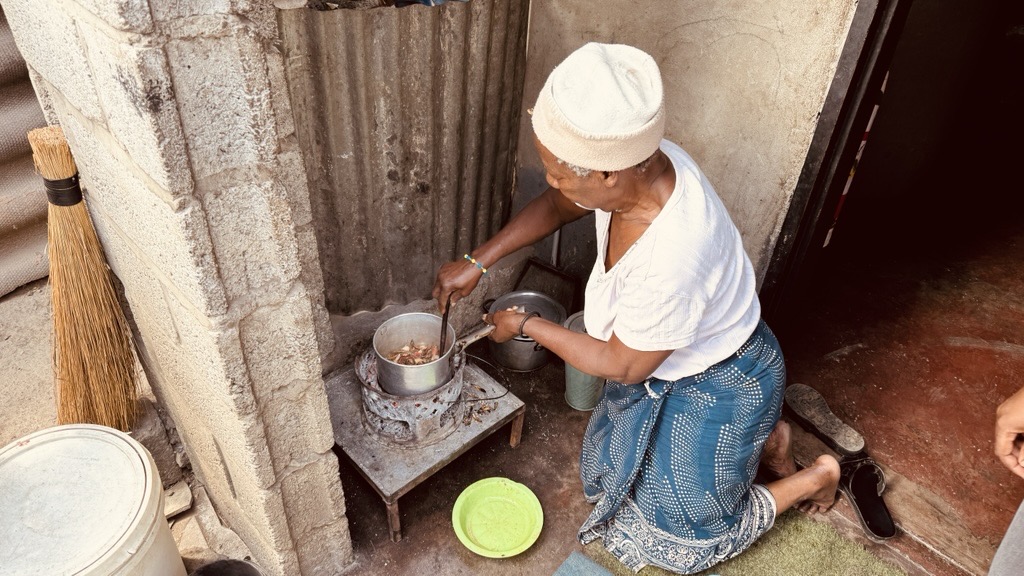
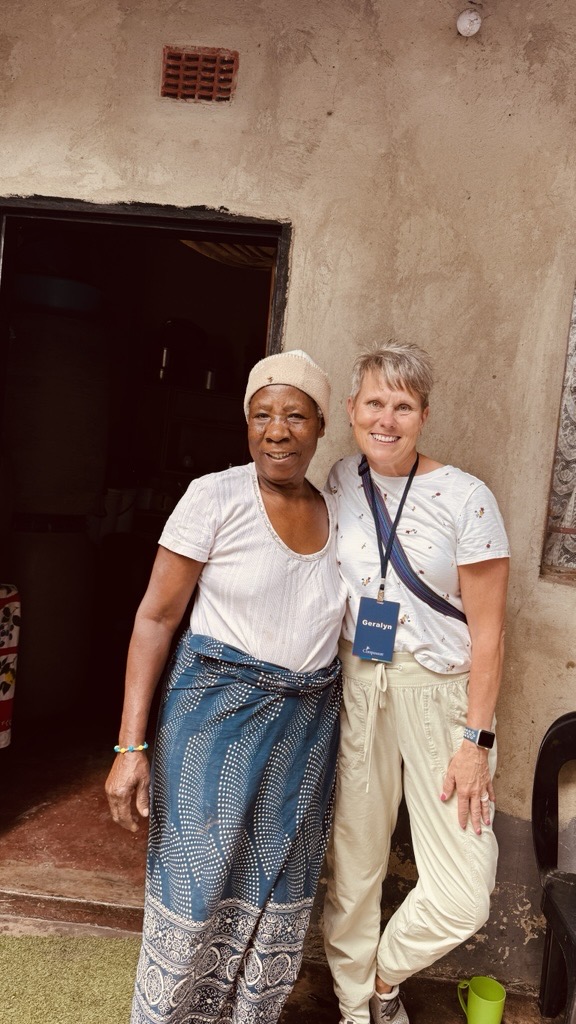
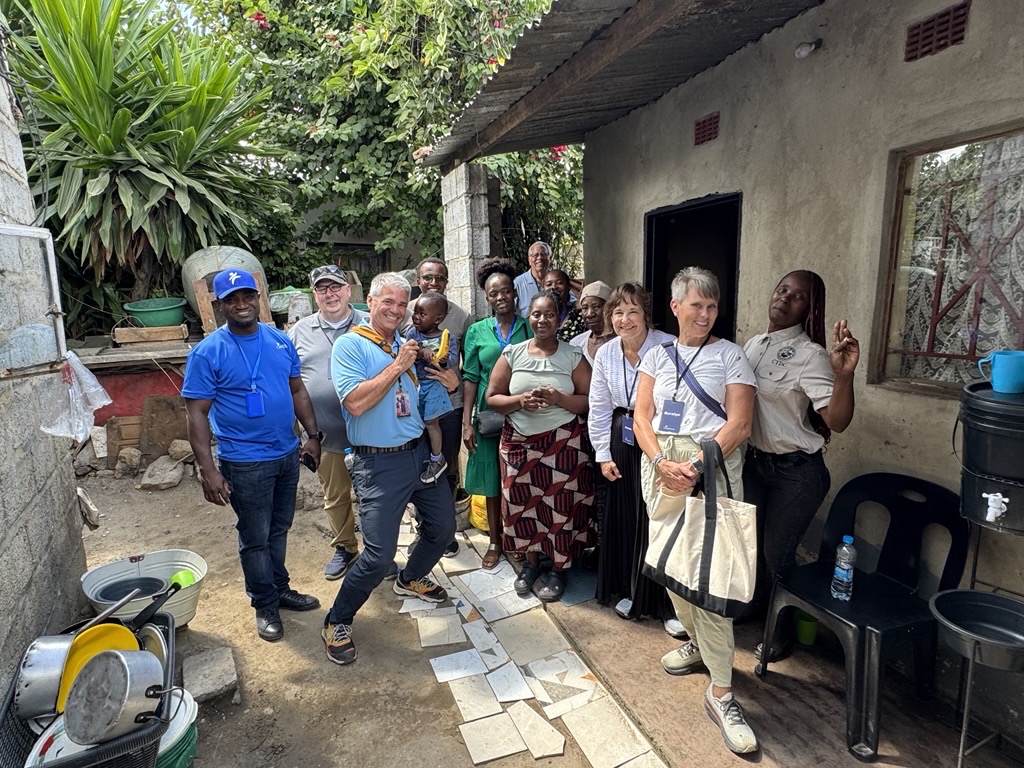
Their hospitality, joy, optimism, and resilience amidst what most of us here would consider “unlivable circumstances” were humbling and inspiring.
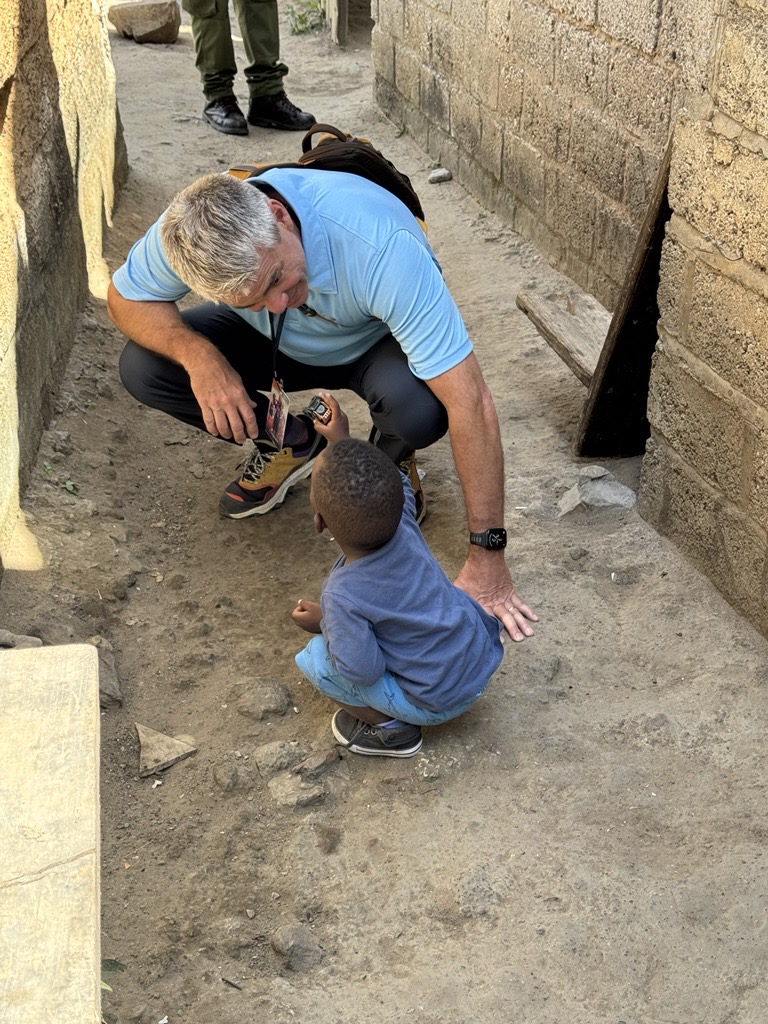
The joy of my trip, though, was being able to give Israel a $3.29 Matchbox toy car I had brought from the U.S. and see his face light up as we played with it together for a few minutes. I won’t soon forget the big hug and smile that he gave me. You would have thought that he had just been given the world.
My Conversation with Compassion CEO, Jimmy Mellado

Before we departed on our 25+ hour journey home (traveling to Africa is not for the faint of heart!), I asked if Jimmy would share a bit more about his heart and vision for Compassion. Because, truth be told, it was such an impactful trip that I was struggling to figure out how best to “capture” this experience and everything I had learned to share with our LifeGuide team, clients, and families back home.
Fortunately, he agreed.
In the conversation below, Jimmy shares the history and heart behind Compassion’s work and why what many think of as simply a sponsorship organization is actually something much deeper. He also shares a personal word of encouragement to our LifeGuide families that I think you’ll find meaningful.
On that long plane ride home, one question he asked kept replaying in my mind. It is the same question that led Everett Swanson to start Compassion back in 1952:
“Now that you have seen… what are you going to do?”
Prefer to read or want to revisit a specific part of the conversation? You can read the full transcript below.
— Conversation Transcript —
Note: The transcript below has been lightly edited for readability. For instance, we removed some conversational filler and tightened sentences where needed to help make the discussion easier to follow in written form, while preserving the heart and substance of the conversation.
Doug: Here we are at the end of an extraordinary week here in Zambia. And what made it extraordinary was the beautiful people and the beautiful country I was able to experience. The thing that struck me the most this week was just—you guys have only been here about two years—and the depth and the breadth of the difference that you guys are making here is just extraordinary. It’s amazing! I know a few years back, I had always thought of Compassion as just a sponsorship organization. But it’s trips like this that show you guys are doing so much more.
I’ve got a number of families—about 800 families—back home that have been on this journey with us. So I was just wondering, could you just take a few minutes and explain your vision for Compassion? What is Compassion really? And what’s the holistic model you have for taking the full Gospel and transforming the lives of the most vulnerable little ones in the world? I’d love for them to hear that directly from you.
Jimmy: Well, Doug, thanks so much! And thanks for all the folks you get to serve. This has been a tremendous week, hasn’t it? Visiting the front lines of churches that are serving in a poverty context has been very inspiring and…humbling, actually.
I don’t want to assume everybody knows about Compassion, so real quick: Next year, we’re going to celebrate our 75th anniversary. Our mission is “to release children from poverty in Jesus’ name.” And the key part of that—I think is getting at some of the things that you’ve noticed—is the “In Jesus name.” That, from the very beginning in 1952, is what started Compassion.
A pastor went to serve the troops. My dad was among the troops that were there in South Korea fighting. And he went to serve the troops, but he came back home with a calling to serve children in poverty. Here’s why: He saw the plight of the war orphans there in South Korea. And a Korean pastor, before he got on the plane to come back to the United States, asked him a question that changed his life and started Compassion. And that question was six simple words. Now that you’ve seen what you’ve seen in South Korea, “What are you going to do?” What are you going to do?
And all the way back over the Pacific Ocean flying on that prop airplane, it’s as if the propellers were speaking to him over and over again. What are you going to do? What are you going to do? What are you going to do?
Because you cannot “unfeel” what you feel. You cannot “unknow” what you now know. You have got to do something. Now, he was a pastor, and didn’t have a lot of money. But he started connecting sponsors in the United States with a child in need in South Korea. And what was cool is that he didn’t do what was normally done back then, which was to train and send people to love on the orphans and the children in Korea.
He saw how much the church in Korea—the Jesus followers in Korea—loved those kids. And he said, “What we need to do is just get behind them.” And that set the stage for the ministry you saw at Compassion here. It’s how we do it.
And so, here’s the thinking. If we’re going to do it in His name, we need to do it in His way! And His way is the same way that God releases us from every form of our poverty in His name. And that’s discipleship. So, when you say you knew us as a sponsorship organization, I get it! Because most every one of our 1.7 million supporters around the world came through the door of sponsorship. That’s how they came to know Compassion.
But that’s not who we are. That’s just something we do. Who we are is a child discipleship organization. Again, if we’re going to do it in His name, let’s do it in His way. And that’s holistic child discipleship. The funding of your sponsorship, in a real and practical way, did one of two things over a child’s lifetime.
It could start as early as the womb and go all the way up to 22 when they’re released into society with a marketable skill to sustain themselves. So, the two things that we do in this holistic discipleship model is: We see an obstacle that’s keeping that child from realizing their God-given potential, and we fund an intervention to remove that obstacle. Number two, if there’s an opportunity we can provide that child to help them realize their God-given potential, we’ll take those funds and provide that opportunity.
So, we remove an obstacle and provide an opportunity they otherwise would not have had.
But it’s always looking at the child holistically and the gospel being central to the whole thing. It is about the gospel of Jesus coming and dwelling into the life of the child fully and holistically. So, if something’s preventing them from realizing their God-given potential? We’ll remove it! An opportunity they otherwise wouldn’t have? We’ll provide it!
And then we watch that child grow—on average 12 years of their life—connected to that church, walking with them during the most at-risk years of their life. If we’re going to do it in His name, in His way, it’s child discipleship!
So then, who did the scripture say was the job of discipleship? It’s the church! And that’s why we only do our ministry in partnership with a local church in an impoverished community.
Now, we used to do it a bunch of different ways—partnering with schools and partnering with other agencies. We don’t do that anymore. About 30 years ago, we made a huge decision. And that decision was this: Because you can’t be good at everything, if there was one thing we were going to be good at, it’s how to have a long-term, healthy, developmental relationship with an indigenous local church.
So, let’s serve the Zambian Church to serve Zambians. Let’s serve the Korean church to serve Koreans.
That’s what we continue to do to this day. We equip and serve the church so they can be the body of Christ to the neediest within their reach. It’s just trying to join God in what He is doing to redeem and restore this world for Him. We’re just called to do it for the children living in extreme poverty, and we’re so grateful to partner with you.
And I’m sure many of you who sponsor children, that’s what you’re actually doing. You are equipping a local church to be the hands and feet of Jesus to the most vulnerable within their reach. So, I just want to say thank you. Thank you so much for that. It’s making a life-changing difference now and a life-changing difference into their eternity.
Doug: The thing I loved in visiting two of the Frontline Church Partners, or “FCPs”—see, you have me saying the lingo now!—is when you looked both pastors in the eye and said, “Thank you. Thank you that I don’t see Compassion anywhere around here.” Because I think you say, “We want to be that silent, quiet partner to that church.”
Jimmy: We don’t want Compassion signs everywhere! We want to proclaim the name of Jesus, not the name of Compassion. And we want to proclaim the name of that church in that neighborhood. I was so thrilled when that pastor said that when they went into the neighborhood, they were initially skeptical about what was going on. But then when they started hearing their neighbors saying how the church (not “Compassion”) was loving on their children and loving on their teenage pregnant moms and others like that. Then the community began to say, “Wow! Let’s get behind that Nazarene church!” Or, “Let’s get behind the Baptist church, because they’re loving on our kids and changing our community.” They did not say, “Let’s bring Compassion!” It’s all about the church.
Doug: I remember it struck me, like, “How have you guys made so much progress in such a short amount of time?” And you had said it was because you partnered with the church that already knew the neighborhood, already had the relationships, already had the reputation. And you were just coming alongside.
Jimmy: That’s right! When the local church is working right, there’s nothing like it.
When it’s working right, it eradicates the need around it. The ministries of the church mirror the needs in their community. These churches are going to do it with or without us. They really will, because they’re the church. They love sacrificially. They give sacrificially. They live there. They’re among them, and they’re going to love on them.
We just get to come underneath and be that quiet partner to resource, to encourage, to give them systems, give them strategies. We get to be intervention partners—if they need water, we know the people who do water. If they need food, we know the people who do food! Savings groups and microfinance? We know those guys! We bring them in and, in a really integrated, coordinated way, help them to join us in serving that local church. That’s the model.
Doug: We could talk all day—you get me cranked up and fired up! But I have one more observation. The thing about this model is that not only is it efficient and effective—it’s also biblical, and we shouldn’t be surprised by this—but when the services and the programs and the support of Compassion is needed most, like in natural disasters or when things come up, Compassion doesn’t leave.
Jimmy: That’s right. We don’t.
Doug: Because the church is there.
Jimmy: That’s right. We never train and send Westerners. We never train and send folks to the countries. We always work with people in the country. So, in a sense, Compassion can’t leave because Compassion is them!
There’s a civil war in Ethiopia. The Ethiopians aren’t leaving because that’s their home. When the genocide happened in Rwanda, we didn’t leave because the Rwandans—what are they going to do? They’re going to stay, they’re going to love, they’re going to sacrifice. And again, we just get to serve and partner with them. So, once we’re in a country, we don’t leave because “we” is “them,” and they’re not leaving.
Doug: So good—that’s so good! Jimmy, I know you have to catch a flight. I just want to say, from the bottom of my heart, thank you for fitting us into your schedule and for sharing your heart and dedicating your life. You could be doing all kinds of stuff, but dedicating your life to bringing the full Gospel to the people who need it the most and who we can learn from…wow. I just thank you for this week. Thank you for the hospitality. You’ve changed my life this week, as did the people of Zambia. Thank you!
Jimmy: Thank you for your love for Jesus and the people of Zambia now. I know the kinds of families that you serve, and I just want to say thank you to you. Thank you for living beyond yourself. And every time there’s a need in front of you, you guys are leaning in. I just couldn’t encourage you more. Thank you for the service that you provide them. Continue to follow Jesus. Blessings upon you in Jesus’ name.
Doug: Thank you. Bye from Zambia!